If your sales funnel isn’t converting the way you hoped, you’re not alone. Many business owners pour time and money into building funnels that look good on paper but fail to drive real results. Whether it's a poorly structured offer, a weak lead magnet, or a one-time offer that just doesn’t land, even the smallest misstep can cost you leads and sales.
In this ultimate sales funnel guide, we’ll break down five critical mistakes entrepreneurs make when creating funnel offers, uncover three persistent myths that might be killing your conversion rates, and reveal smart tactics to guide prospects toward the best offer every time.
By the end of this blog, you’ll learn how to attract more people to your lead magnet, identify signs your one-time offer won’t sell, and discover how to design a high-converting funnel strategy that leads to more profits and less guesswork because, at the end of the day, profit is essential for business success.
If you're ready to stop second-guessing your funnel and start seeing serious results, this guide will walk you through exactly what to fix and what to focus on. The key is to sell smarter.
4 Mistakes Business Owners Make When Creating Sales Funnel Offers
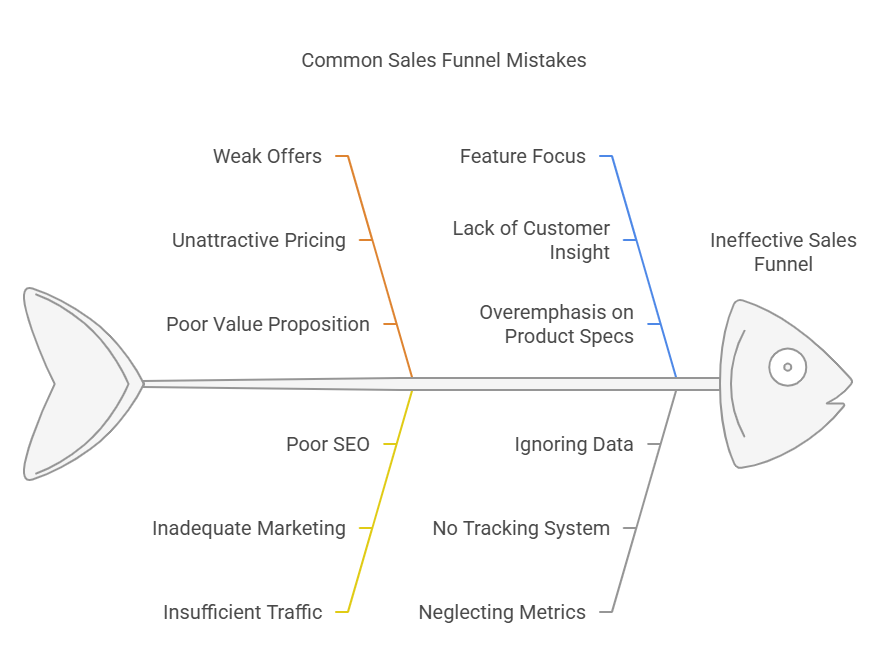
Your sales funnel can be a highly effective tool for nurturing leads and building a relationship with your audience. The offers you include in your funnel will contribute greatly to its success and ultimately to a profitable product launch. To reduce the time spent learning by trial and error, here are some of the biggest mistakes to avoid when creating offers.
Pitching Weak Offers
The biggest mistake a business owner can make is focusing all their attention on the core offer and neglecting the smaller offers along the way. If your supporting offers are weak, they won’t effectively qualify leads or prime your prospects to purchase your core offer.
Plan and create each offer like it’s the core offer. Each offer should address a problem your audience faces and offer a solution. Each piece of content should provide value. This is what keeps the prospect tuned in and interested in future offers.
Not Bringing In Enough Traffic
Some business owners focus on building their funnel and loading it with great offers but neglect the most important part, the lead magnet. Make it powerful, valuable, and relevant to your core offer. You want to cast a wide net, but you also want to attract the right people for your core offer.
Use smart growth hacks to maximize your business revenue and start optimizing your lead magnet to pull in high-quality leads who are more likely to convert. Invest in SEO and research to find out where your target market hangs out online so you can reach them there. Focus on driving traffic to your sales funnel.
Focusing on Features, Not Benefits
When you have a great product to sell, you’re tempted to list all of its amazing features. After all, this is what makes it such a great product. But if you do this, you’re violating the cardinal rule of sales copywriting: “Focus on benefits, not features.”
Features describe qualities of the products. They tell you what the product does, its specs, its performance, and the colors it's available in. Benefits describe how the product or service will change somebody’s life or the problems it will solve.
For example, the features of a time management tool include checklists, templates, tracking, and alerts. The benefits of a time management tool include regaining control of your time, getting more done, and freeing up time to do the things you love.
Not Paying Attention to Metrics
Many business owners create an effective sales funnel that brings in leads and turn them into buyers. If they have some success, they’ll often set it up and forget about it. But a good marketer uses their software’s metrics to monitor, get feedback, and constantly improve their sales funnel.
There may be a piece of content or an offer in your funnel that’s driving people out. For example, after purchasing your core offer, very few people go on to buy your upsell.
If you’re just looking at overall sales, you may not even notice this. But if you’re watching metrics, you’ll see that you’re missing out on an opportunity to sell a higher-ticket item to a select group of customers.
Creating powerful offers for your sales funnel takes work and time, but if you avoid these common mistakes, you’ll already be ahead of the game.
Top 7 Ways to Attract People to Your Lead Magnet
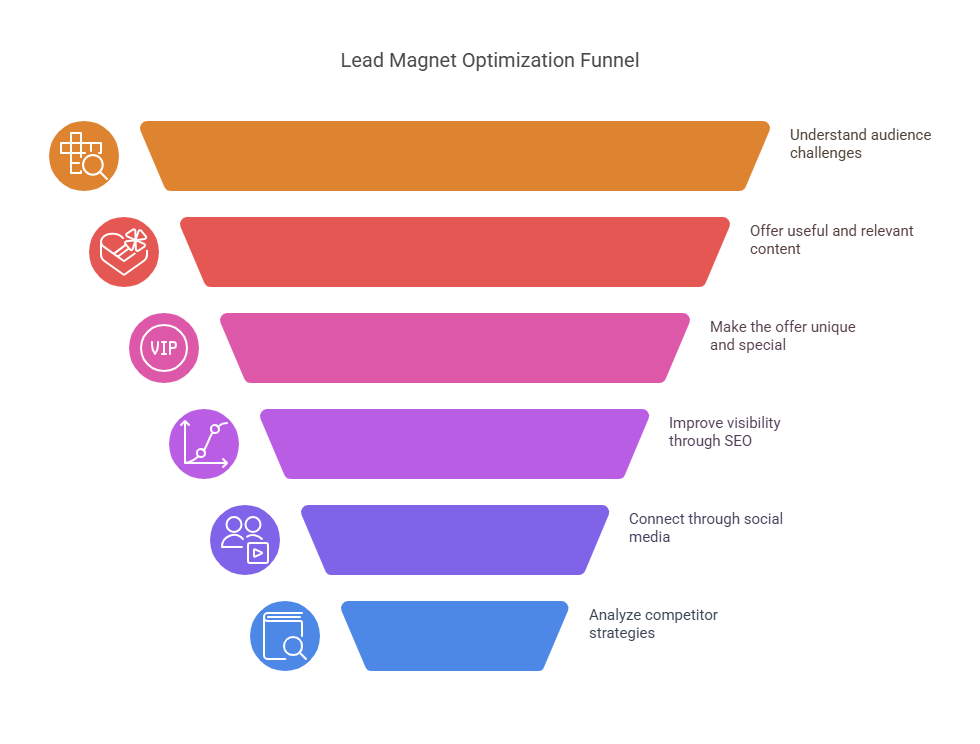
Your lead magnet is a giveaway designed to pull people into your sales funnel, offering prospects valuable content in exchange for their name and email address. But how do you attract people to your lead magnet?
The idea is to create compelling content that encourages people to click over to your blog, YouTube channel, or other content, and then, once there, opt in to your lead magnet. This approach not only builds your list but also helps you validate your ideas quickly, ensuring the people you're attracting are genuinely interested and more likely to convert.
Cast a net wide enough to draw people into your sales funnel but narrow enough that it primarily attracts people who will ultimately buy your core offer.
Here are some ideas that will help you create content that will attract people to your lead magnet.
Solve a Problem
The best content solves problems for its users. Your target audience is facing issues and challenges. Your content may not solve all their problems, but it teaches a skill or a single action they can take that will produce immediate and visible results.
Provide Real Value
Even though your lead magnet is free, it should be packed full of value. The same principle applies to the content that attracts people to your lead magnet. The blog post, social media post, or YouTube tutorial should offer solid information so that the reader/viewer has confidence in your ability and sees you as a trusted source of information.
Incorporate psychological trigger hooks, like curiosity, authority, and reciprocity, to deepen engagement and make your audience more likely to opt in and take the next step.
Remember that the content you create doesn’t only pull people into your sales funnel; it forms your prospect’s first impression of you.
Make It Exclusive
Part of what gives a lead magnet its value is its exclusivity. It should be content that the customer can only get from you. All content that directs people to your lead magnet should reinforce your expertise and value.
Look for topics and ideas that the competition isn’t covering and focus on that.
Use Search Engine Optimization
Since you want to put your free offer in front of as many people as possible, use search engine optimization to drive traffic. Find popular keywords that are relevant to your lead magnet and core offer and use them in your content.
Know Your Audience
To create an offer that your audience will love, you need to get to know them first. Spend time studying and interacting with your target audience, and then create a profile that describes them in detail. Use this to figure out what issues they face so your content and lead magnet can address them. The ideal customer profile will also help you figure out which marketing channels to use to reach them.
Get Social
Social media should be a major part of your marketing and product launch strategy. Create an engaged following on social media and get to know them there. Join discussions and offer whatever help you can. When you’re ready to offer your free lead magnet, you’ll have a built-in audience ready to click.
Study the Competition
Do some research and learn what your competitors are doing. In particular, study the content they use to attract people to their lead magnets and, ultimately, their core offer.
Go through their process step-by-step: Follow them on social media, click links to their blog posts, and opt-in to their lead magnets.
It will help you see what works and what doesn’t. It will also provide inspiration for your content and help you come up with ways to differentiate yourself from the competition.
Align your content and lead magnet with your core offer. Remember that the ultimate goal is to direct people to your core offer and motivate them to purchase. Your ‘pre-funnel’ and lead magnet content should be strongly tied to your core offer and the problem it will solve for your audience.
Your lead magnet is what draws people into your funnel, so you want as many people as possible to see it, and you want it to be good.
5 Signs Your One-Time Offer Won’t Sell
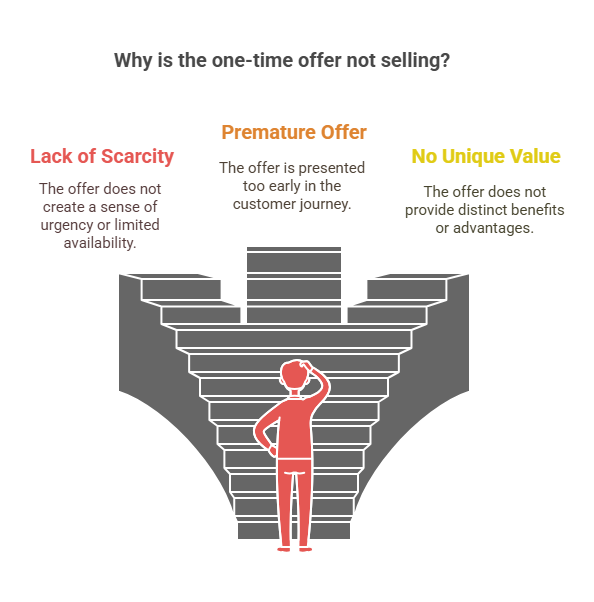
A one-time offer is a powerful way to move people further down your sales funnel while also bringing in some extra revenue. It is available for a limited time only, or in limited quantities, and this perception of scarcity pushes people to make a purchase. That purchase significantly raises the chances that they will buy your core offer.
But how do you create a one-time offer that converts? Learn from other people’s mistakes.
Here are 5 signs that your one-time offer won’t sell.
It Doesn’t Emphasize Scarcity
The secret to one-time offers is scarcity. People must feel a sense of urgency; it’s here today but won’t be tomorrow. If they’ve seen your ‘one-time offer’ somewhere else or it’s just not that special, then you lose all credibility.
Set a limited time or limited number for your offer and make this clear when you pitch it. For even better results, add a counter or clock to show that time is running out. Use language like “last chance” and “while supplies last” and mean it.
This doesn’t mean that you have to constantly create a new one-time offer. If it’s an information product, periodically change up the name and isolate different benefits. If you can’t do that, make it clear that the offer is limited based on when they first encountered it. It still exists, but they will never again get it for the same price.
Too Early in the Funnel
Placement is key when it comes to one-time offers (OTO). They work best in the middle of your funnel, when the prospect is past the initial awareness stage. If you pitch your OTO too soon, they may not be on board or ready to make a purchase. Spend some time demonstrating your expertise and overall value before presenting them with an OTO.
It Doesn’t Offer Unique Value
Every offer in your sales funnel should offer unique value. It should help the prospect with a problem they’re facing and produce tangible results. It should stand out from other offers in your funnel and other products on the market.
Your Offer Is Too Complicated
A common mistake many businesses make is that their offers are too complicated. If you include too many instructions or there’s too much information for the customer to digest, they’ll breeze past your OTO without buying.
Use an entrepreneurial operating system to simplify and clarify your messaging, ensuring each offer is aligned with your vision, speaks directly to customer pain points, and drives real traction.
The best one-time offers are simple. They explain the benefits (the unique value) and the deadline. The customer knows what they’ll get by buying the product, and they know they’ll miss out if they don’t do it soon. This is the simple but effective recipe for a good OTO.
One Size Fits All
One-time offers come in all shapes and sizes. Don’t use a formulaic approach to creating your one-time offer. An OTO that works in the wellness industry might not work for your industry.
Or, if your product is more serious and your target audience more reflective and thoughtful, a flashy one-time offer will repel potential customers, not attract them.
Once you find out what works for your audience, your brand, and your industry, you’ll be able to create an OTO that sells. The key is to understand your target audience and offer a product that genuinely helps solve their problems.
Build a good relationship and create a dialogue with your audience, and you’ll know exactly what they need and how to present it to them.
How to Move Prospects Towards the Best Offer Choice
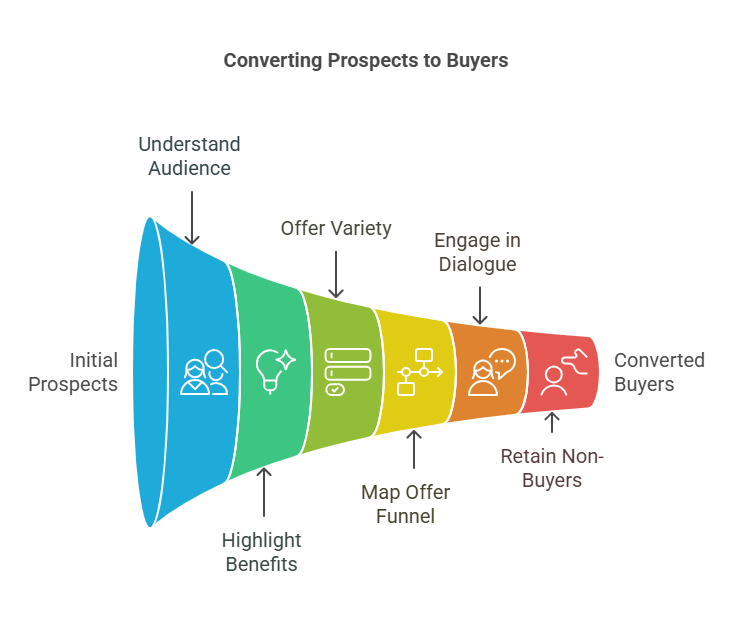
What is the secret to sales funnel success? Every offer must help the prospect solve a problem. You have created an ideal customer profile, but no two customers are 100% alike. Different segments will take a slightly different path to get to your core offer. Your job is to make sure they all eventually get there.
How do you do this? Here are some ways you can help prospects move through your funnel and get to your core offer.
Know Your Audience
Get to know your audience so that you can offer multiple routes to your core offer. Some members of your audience might prefer the regular interaction that comes with a subscription offer, while other segments might prefer independent study and would be more likely to purchase a low-ticket offer like a pre-recorded mini-course.
If you can understand their pain points, you can offer the right product, at the right time, to the right people. Research your audience through direct interaction, including surveys and polls. You can also study them indirectly by monitoring their social media, interacting with them in groups, or looking at your website and social media stats.
As you gather insights, don’t forget to leverage social proof in marketing. Use testimonials, reviews, and user-generated content to reinforce trust and show potential customers that others have found value in what you offer.
Explain the Benefits
For each offer, don’t just tell your audience about the product features, explain the benefits, or the ways it will improve their life. Paint a picture for the prospect that illustrates what their life will be like after using the product. For example, it will free up time or money, or make a task easier, or make them feel more confident.
Think about these pain points when you create all of your offers.
Offer Variety
Don’t just create one type of offer and expect every prospect to buy it. Offer a variety so you capture all segments of your target audience.
Include free offers for those who need a lot of proof, low-priced offers for those who like to test things out, a one-time offer that will push hesitant prospects off the fence, and a high-ticket offer that will appeal to members of your audience who are willing to spend more for quality items. Don’t forget to add order bumps, upsells, and downsells. Give people as many chances to buy from you as possible.
Map Out Your Offer Funnel
Take some time to plan out your sales funnel. There are different types of offers that work best at different stages. For example, in the early awareness stage, you should offer freebies to spread the word about the value of your products. Products closer to the end of the funnel should be designed to lead people to the core offer and upsell offer. Try to provide exactly what they’re looking for at each stage of the sales funnel.
Create a Dialogue
Communication with your target audience shouldn’t go in one direction. Create a dialogue where your customers are engaged and sharing their thoughts and feelings with you. This will give you valuable feedback that you can use to help them make the right purchases along the way.
Don’t Eliminate Non-Buyers Right Away
If someone doesn’t buy, don’t immediately throw them out of your sales funnel. When they don’t buy, this is another form of feedback telling you that the offer is not right for them at this time. Offer alternative products or further content to keep the dialogue going. They may still buy at a later point in time.
Planning Your Sales Funnel
It doesn’t take a great deal of work or technical ability to create an effective sales funnel or the offers within it. You just need to know your audience and create offers that provide them with value and are responsive to their needs.
Top 3 Sales Funnel Myths
A sales funnel is the journey a potential customer makes from the time they first become aware of you to the purchase of your core offer and beyond. The offers you include in your sales funnel will determine its success.
Each offer allows you to build a relationship with your audience and move them further through the funnel, qualifying them for the purchase of your core offer. Using customer segmentation can make this journey even more effective by tailoring your offers to different audience groups based on their behaviors, needs, and stage in the funnel.
If done right, they can be highly effective in driving sales. Here are some of the biggest myths about sales funnels.
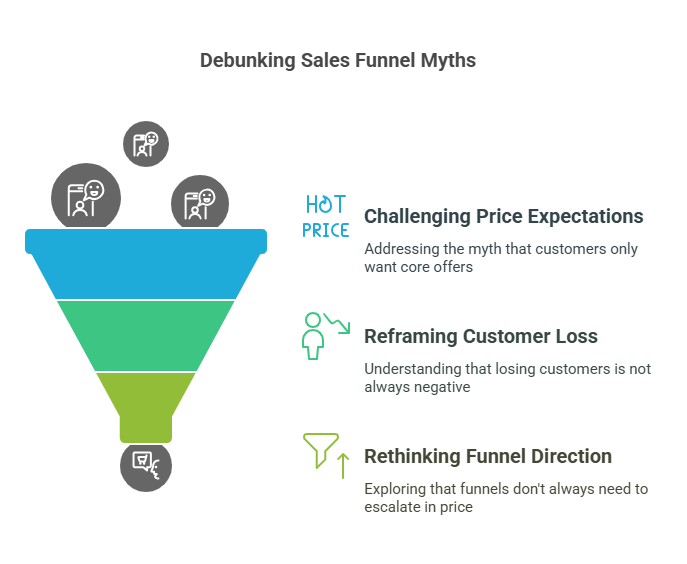
Sales Funnels Must Go from Low to High
When most people imagine a sales funnel, they picture free or low-priced offers at the front end and gradually rising price tags as you move to the core offer. But this is not always the way an offer funnel works.
What’s more important than the price tag is placement of offers in the funnel and how your audience will react. At the entry point of your sales funnel, people are just learning about the value you offer.
Offers presented in the middle of your funnel, whether they’re freebies, low-ticket, one-time offers, or even high-ticket offers, help you learn about your customers and determine whether or not they’ll buy the core offer. The key to success is putting the right offer at the right stage.
People Only Want to Pay for the Core Offer
Another common myth is that most of the offers in your funnel should be free. The idea is that people won’t pay for small offers along the way, and you want to prime them for making a big purchase at the end. But offering products at various prices as they move through your funnel qualifies them by separating buyers from non-buyers.
It also allows you to segment your audience and customize how you eventually get them to your core offer, an approach that can be tailored based on the type of company you run, whether it's product-based, service-driven, or subscription-focused.
A certain percentage of the people who come into your funnel are freebie chasers. They opted in to the free lead magnet, and they’ll happily take any of your free offers, but they will never buy even at a low price. Adding paid offers, even low-ticket ones, will help you separate the freebie-seekers from the serious buyers.
Losing People Is a Disaster
When people don’t buy or drop out of your sales funnel, it’s not the end of the world. You can still benefit from the work you’ve done.
It’s worth maintaining the relationship you’ve built, even if they aren’t interested in your core offer. They might buy something from you later on or elsewhere. When people don’t buy, it just means that the offer is not for them at this time.
People dropping out also provides valuable feedback. If you’re losing people at a particular point in your funnel, this signals the need for improvement. Either the offer doesn’t resonate with your audience, you’ve priced it too high or too low, or it’s in the wrong place.
How to Create an Effective Sales Funnel
How do you create an effective sales funnel? It takes some planning and perseverance, but through trial and error, you’ll start to see results and quickly learn what works and what doesn’t.
You’ve just uncovered the biggest mistakes, myths, and missed opportunities that hold sales funnels back from reaching their full potential. Now it’s time to take the next step and apply what you’ve learned to your business, with expert guidance tailored to your unique goals.
At BoostMyProfit, we’re offering a Free Strategy Session to help you do just that. This no-obligation, one-on-one session is designed to understand your needs and recommend the right solution for you. We’re not here to push. We’re here to help.
Frequently Asked question's
A sales funnel is the step-by-step journey a potential customer takes from discovering your brand to making a purchase. It helps businesses guide prospects through awareness, interest, decision, and action.
For a typical sales funnel, five stages include awareness, interest, consideration, intent, and purchase.
In some models of the sales funnel, marketers expand it to include awareness, interest, consideration, intent, evaluation, and purchase.
An example of a sales funnel could be when a visitor sees your social media ad (awareness), clicks to download a free lead magnet (interest), reads your email sequence (consideration), clicks on your offer (intent), checks pricing (evaluation), and finally buys your product (purchase).
The 7 steps to ensure continued sales are prospecting, preparation, approach, presentation, handling objections, closing, and follow-up.
A lead is someone who has shown interest in your product or service, typically by engaging with your content, signing up for a lead magnet, or filling out a contact form. They are potential customers at the top of your funnel.