
A product launch is not like a date on the calendar but a culmination of hard work put in over months and sometimes years. It’s the ultimate result of innovation and strategic planning. So, if you're launching a brand-new product or reintroducing an updated version of an existing product, meticulously plan and execute flawlessly to ensure the success of your launch.
Our comprehensive guide on how to launch a product delves into every aspect of a successful product launch. It starts from initial strategy to post-launch analysis to ensure that your product hits the market with maximum impact.
Importance of Planning Your Product Launch
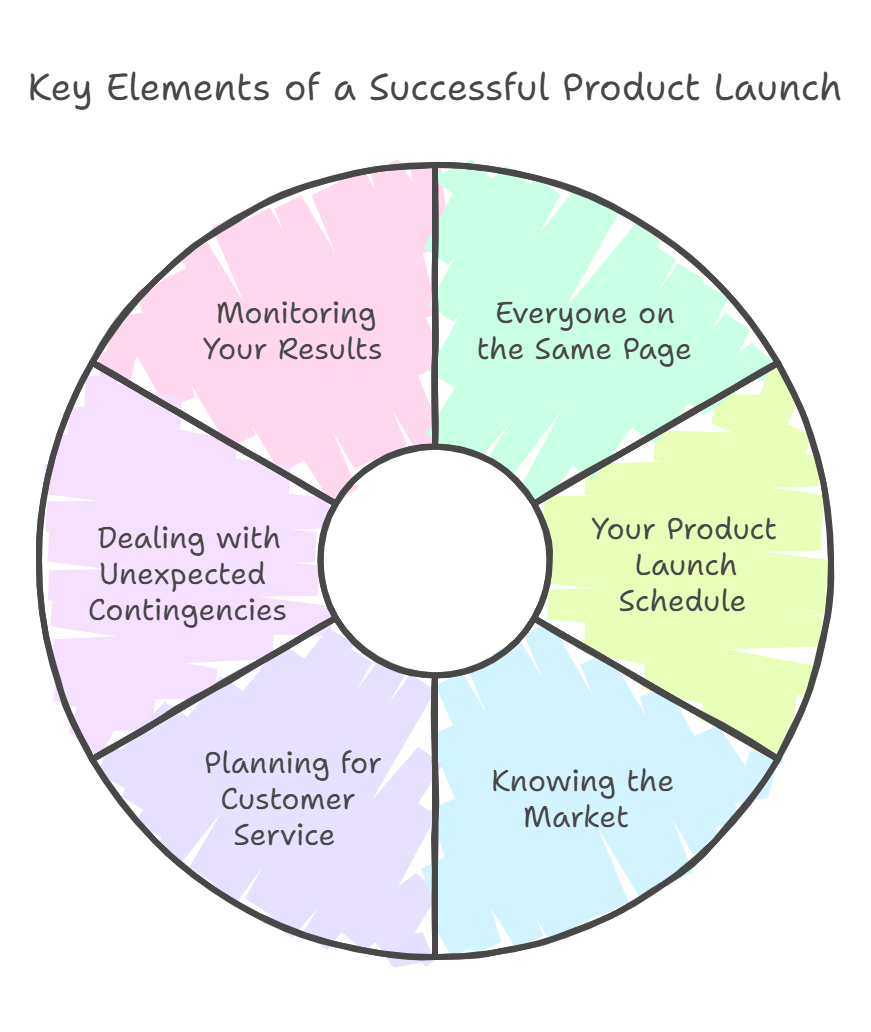
A product or service launch is always a big deal. A great deal of time and effort goes into the launch, and its success is dependent on the planning phase. A well-structured plan is the bedrock of a successful product. This is why businesses spend months ahead of the launch mapping out all the details. After all, a successful launch isn't just about creating buzz. It's about driving profit, which is essential for sustaining growth, funding innovation, and building long-term business success.
Everyone on the Same Page
Effective launch planning fosters a unified front, putting everyone on the same page. There are few people who can launch a product all by themselves. You may have freelancers, outsourcers, partners, affiliates, and others helping you along the way.
As the launch manager, your role is to orchestrate a cohesive vision, establish clear communication channels, and meticulously track the progress of numerous moving parts.
Your Product Launch Schedule
Time is of the essence in a product launch. You need a schedule that includes every task, deadline, and milestone. This is especially critical as the day of the launch approaches. A good schedule ensures that everything is ready for the big launch and any snags along the way can be dealt with.
According to a study by Product School, "A well-defined timeline helps in managing expectations and ensures all teams are aligned on the launch date."
Knowing the Market
You need to understand your target market and its needs well. A major part of the planning involves researching your market, choosing the right product, and testing to make sure this product is what the people want.
Gathering feedback from your target market is crucial for refining your launch strategy and maximizing its effectiveness.
Planning for Customer Service
On the day of the product launch, smooth operations are essential. There will certainly be customer issues and questions. You need to be ready to deal with these issues and questions long before your customers start asking them. Have a good Entrepreneurial Operating System in place.
Dealing with Unexpected Contingencies
A crucial aspect of launch planning is anticipating and preparing for potential pitfalls. Part of product launch planning is dealing with things that could go wrong. You need several backup plans for various situations.
What if, for example, your product sells more than you're able to handle? Long before the launch, have a Plan B in case something goes wrong.
Monitoring Your Results
Once the product is launched, measure your results to see whether or not it's achieving the goals you set. This data-driven approach provides valuable insights for refining your launch strategy and enhancing future product launches.
Effective planning alleviates the anxiety and panic often associated with a product launch. With thorough preparation, you can focus on implementation and monitoring, addressing minor issues without derailing the entire launch. As Jeff Walker, the creator of the Product Launch Formula, emphasizes, “Planning is the key to creating a successful launch.”
It's no exaggeration to say that planning is what makes or breaks a product launch.
How Partners and Affiliates Amplify Your Product Launch Success
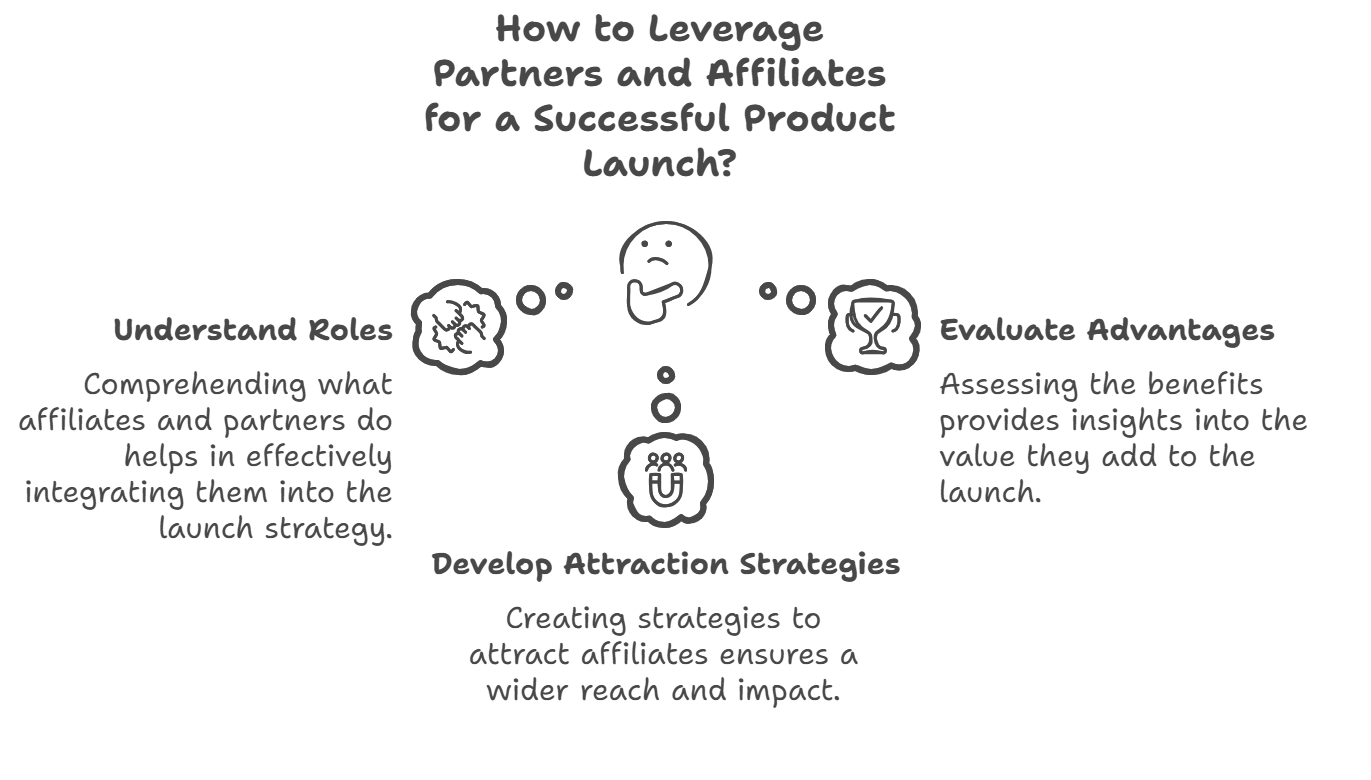
You may be a one-man/woman marketing machine, but it always helps to have others along for the ride when you're planning a product launch. Various partners and affiliates help you leverage your marketing and lead to a far more successful product launch. By collaborating with the right people and taking time to personalize your marketing efforts with customer segmentation, you can target different audience groups more effectively and maximize your launch impact.
What Affiliates and Partners Do
Your affiliates and other business partners help you build a buzz around your product and make actual sales. They promote your product through their marketing for commission from sales, and you produce marketing materials, content, and training materials for them to use. Exactly how much direction you give them depends on your preferences.
The Advantages of Using Partners and Affiliates
Partnering with affiliates offers several advantages. It expands your market reach, as your product is promoted to a wider audience.
Your partners also help you build excitement around your product. The members of your target market will see your product advertised in multiple places. It will seem like everybody is talking about it. It also lends your product more legitimacy since it's being sold at multiple outlets.
They also act as your online sales force. You can leverage their efforts for more sales. This creates a win-win situation where everybody prospers.
How to Attract Affiliates to Your Product Launch
Attracting affiliates requires a strategic approach. Start by reaching out to any affiliates or partners you've worked with before.
You can also reach out to others who might be interested. One way to do this is to invite members of your audience who are salespeople or influencers. You can contact them through email or social media and explain your product and system to them. This not only helps spread the word but also allows you to leverage social proof in marketing, making your product more credible and appealing to a wider audience.
Another good source of help is bloggers or influential people in your niche. You can reach out to new people you're not already connected with but whose audience could use your product. Make a good first impression, and explain your product and its specific benefits to users.
There are also places where you can post your affiliate program, such as:
When you contact potential affiliates, let them know what materials and training you'll provide. Make sure they understand the benefits of working with you.
Initiate relationship-building with affiliates and partners during the early stages of your pre-launch. This allows ample time for communication, rapport development, and trust-building.
5 Critical Mistakes to Avoid in a Product Launch
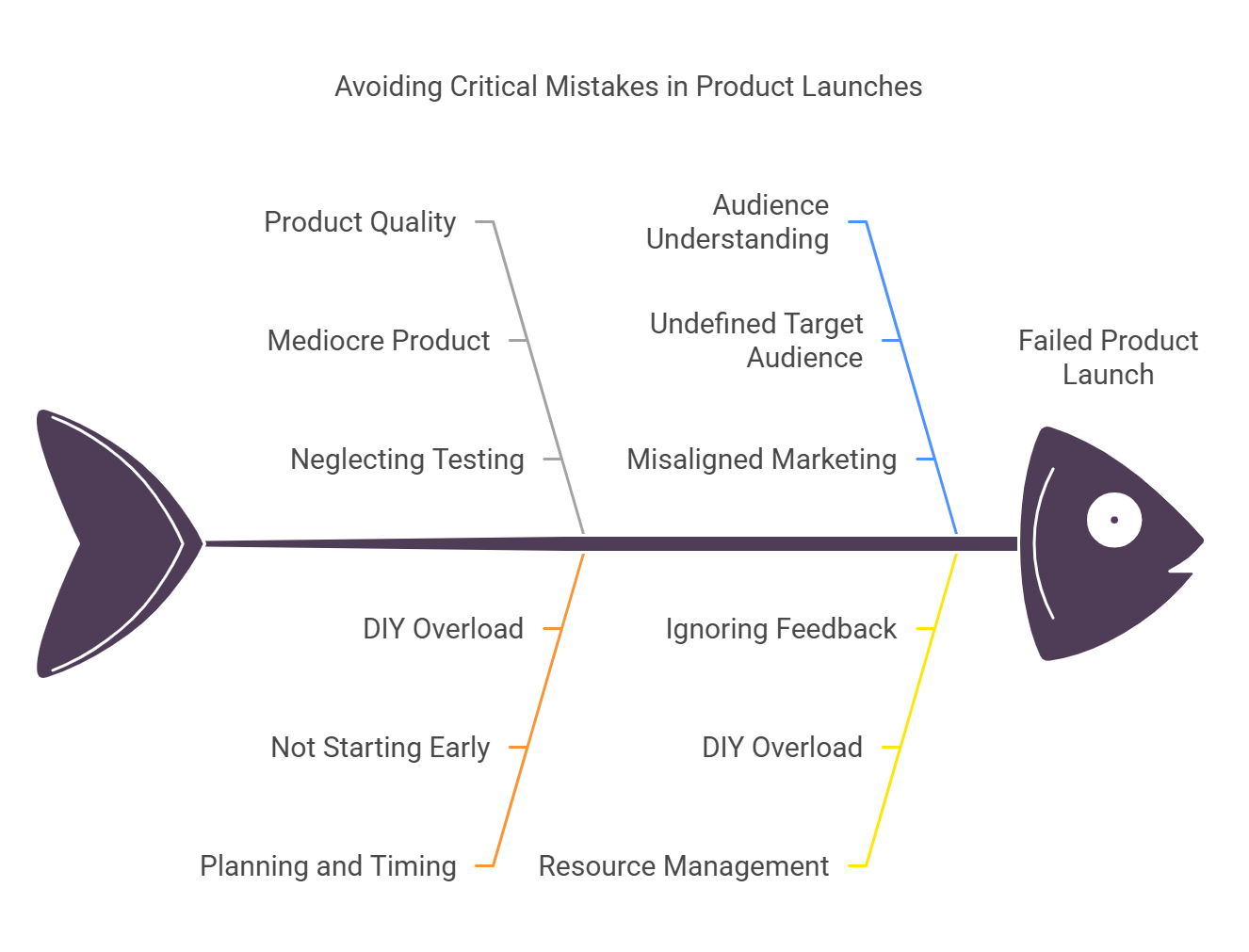
Before a big product launch, there are many moving parts, and there's a great deal going on. It's hard to keep everything straight, and there are bound to be at least some minor problems. Despite meticulous planning, common pitfalls can derail a product launch. Avoiding these five critical mistakes is crucial for a smooth and successful launch.
Mistake 1: Launching a Mediocre Product
Many marketers pick any old product because they think that their marketing prowess alone will sell it, failing to consider the needs of their customer base. If your product doesn't live up to the promise of its marketing, you'll have a disaster on your hands. You'll lose customers and damage your reputation, and there may not be a next product launch.
The cornerstone of a successful product is a high-quality product that meets customer expectations.
Mistake 2: Not Starting Early Enough
Businesses often underestimate the time required for launch planning. They start planning just a few weeks out from their launch and then find that either they haven't allowed enough time to fully promote the product and get interest going or they run into trouble along the way.
Initiate planning well in advance, ideally two months before the launch date, depending on the product's complexity.
Mistake 3: Undefined Target Audience
Businesses often have a good product but don't fully flesh out how to communicate its unique benefits to their market. With so many products flooding the market, why should a person buy yours? You need to clearly identify this and figure out how to communicate the unique benefits to your prospective buyers.
Mistake 4: DIY Overload
Attempting to manage every aspect of a product launch independently leads to burnout and potential oversights. If you try to do everything by yourself, you may run into serious trouble. First, there's all of the work that goes into the pre-launch phase. You'll be burning the candle at both ends trying to get it all done.
There are also skills you may lack or that others could do better. Finally, if you have an online sales force of affiliates and partners selling for you online, you'll greatly increase your reach.
Mistake 5: Neglecting Product Testing and Feedback
Many businesses fail to test their products and gain feedback from their target market. This feedback is objective data that tells you how your market really feels about your product. It tells you what changes you need to make to your product or messaging in order to make your launch a success.
How to Build Anticipation and Engagement for Your Product Launch
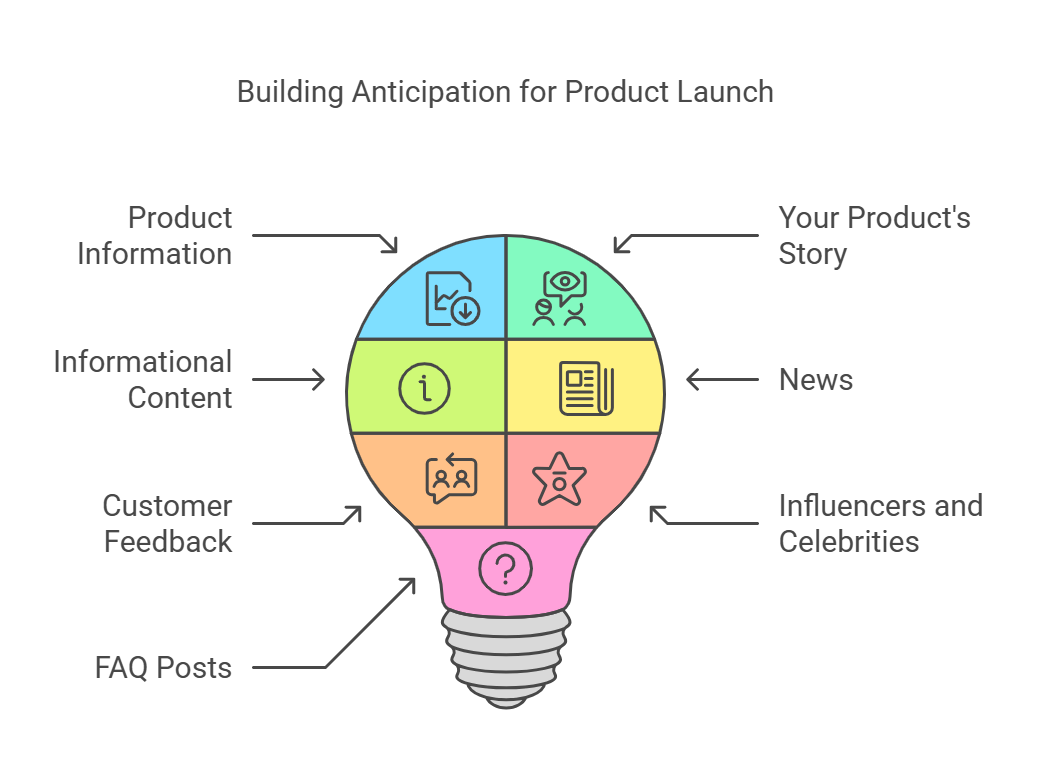
A dedicated blog is a powerful tool for generating buzz and fostering engagement during a product launch. Long before the big day, create a blog and start populating it with content. You'll raise awareness for your launch and also establish a good venue for two-way communication with your audience. For extra inspiration and strategies, you can also dive into the How To Market In Tough Times book by BoostMyProfit, which offers practical tips for building momentum even when market conditions are challenging.
But what do you blog about? Here are some ideas you can use for your product launch blog.
Product Information
A good place to start is by telling your readers about the product you're launching. Instead of writing content that's simply promotional, try to explain what your product is, how it works, and what makes it unique. Provide real informational content that relates to your product.
Your Product's Story
Write blog posts telling the story of how and why you developed your product. Start with the original problem you faced and how it led you to the development of your product.
Informational Content
Not all of your blog content needs to be strictly about your product. In fact, it shouldn't be promotional at all. Offer tips and ideas that are related to your product. For example, if you're offering a product that teaches small businesses how to use social media, offer social media tips in your blog.
If you're selling an internet security product, offer ideas for keeping your computing secure. Focus on "how-to" content for prospective buyers of your product. This approach not only builds trust but also helps you validate your ideas quickly and minimize risk before the full launch.
News
Share and comment on news stories that relate to your product on your blog. For example, if you're selling sporting gear, report on big sporting events that are coming up. If you're selling pet health products, report on a news story about rising rates of cancer in cats.
Customer Feedback
Pre-launch, you can offer free samples and trials to select members of your target market to get their feedback. Take the positive feedback you get and create blog posts out of it. Present them as customer stories or case studies.
Influencers and Celebrities
You can do the same with celebrities or influencers in your niche. Give an influential person a chance to use your product and then do an informal interview with them about it. You can then publish this interview on your blog.
FAQ Posts
Take questions from your prospective customers about your product and write blog posts answering them. These can either be real questions that people have asked you or general questions you would expect them to ask.
Create a good mix for your blog of different types of content so that your readers have variety, and choose or create content with engagement in mind.
The Day of Your Product Launch: Execution and Responsiveness
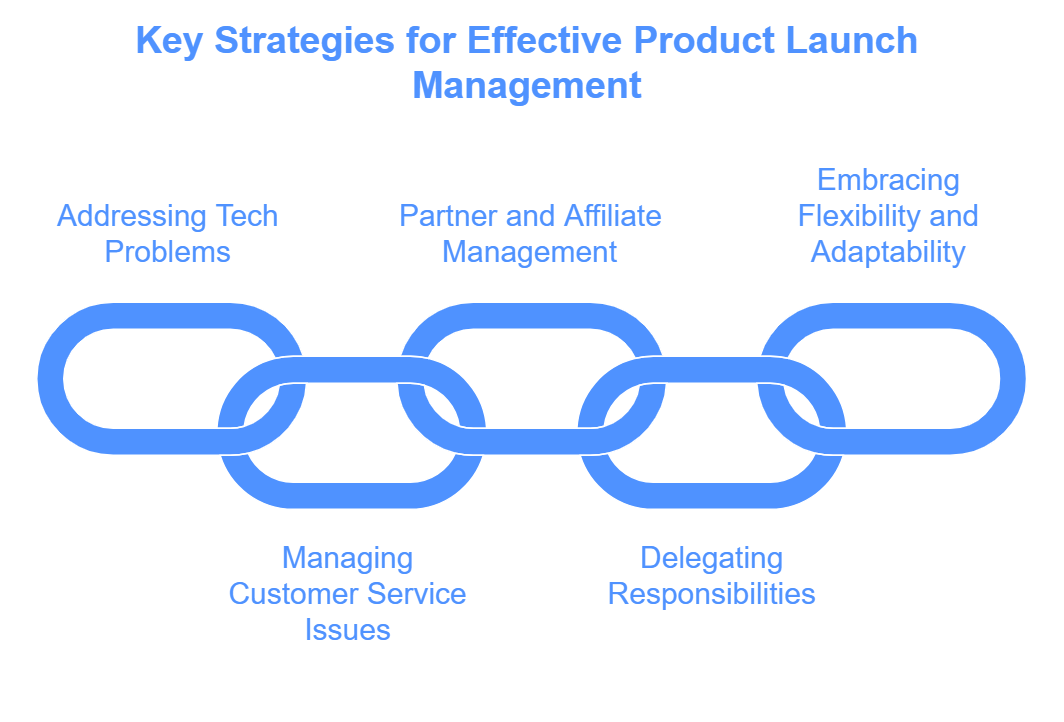
There is a great deal of preparation that goes into the pre-launch phase, and then there's the big day. The launch day is the culmination of your efforts. It is exciting but can also be nerve-wracking. Meticulous preparation and swift responsiveness are crucial for a successful product launch.
For deeper insights and proven tactics, the eCommerce Mastery Strategies book can be a valuable guide to help you navigate the challenges and maximize your results.
Addressing Tech Problems
Technical glitches are common during a product launch. No matter how carefully you've set things up and tested. For example, if you have more orders than expected, your site could crash. There could be an unexpected problem with your shopping cart; for example, it may not take orders from certain countries.
You should be standing by and monitoring all activity during your launch day so that if there is a problem, you can respond to it quickly. Make sure that any tech help you have is also on hand at this crucial time.
Managing Customer Service Issues
The type of problems you're most likely to encounter is of the customer service nature. You're likely to have customer questions, problems, issues, and complaints on the day of the launch.
You and all of your customer service reps should be manning the phone, email, and chats the entire day. Respond quickly and courteously, and offer the best customer service possible. Remember that these early purchasers are likely to talk to others, so your customer service at this stage can make or break your product sales.
Partner and Affiliate Management
There could be trouble due to partners, affiliates, distributors, and others who are selling for you. They might have questions or issues. It's possible that you may have a rogue affiliate engaging in some unethical practice in the name of your product.
Touch base with all of your sales force first thing on the launch day and maintain contact with them throughout the day. Check in with them to see if they're having any problems. Monitor closely what they're doing and sign up for alerts so that you'll see what's going on across the web.
Delegating Responsibilities
Remember that you don't have to do everything yourself on your launch day. Delegate responsibilities and stay in touch with everyone throughout the day.
It's rare that even the most successful product launch doesn't experience a snag or two on the day of the launch. This is a critical day that sets the tone for your product's sales from here on out, so make sure you're aware of what's going on and respond quickly when needed.
Embracing Flexibility and Adaptability
Even the most meticulously planned product launch can encounter unexpected challenges. Maintain flexibility and adapt to unforeseen circumstances. Swiftly address issues and implement contingency plans as needed.
The Post-Launch Phase: Analysis, Iteration, and Growth
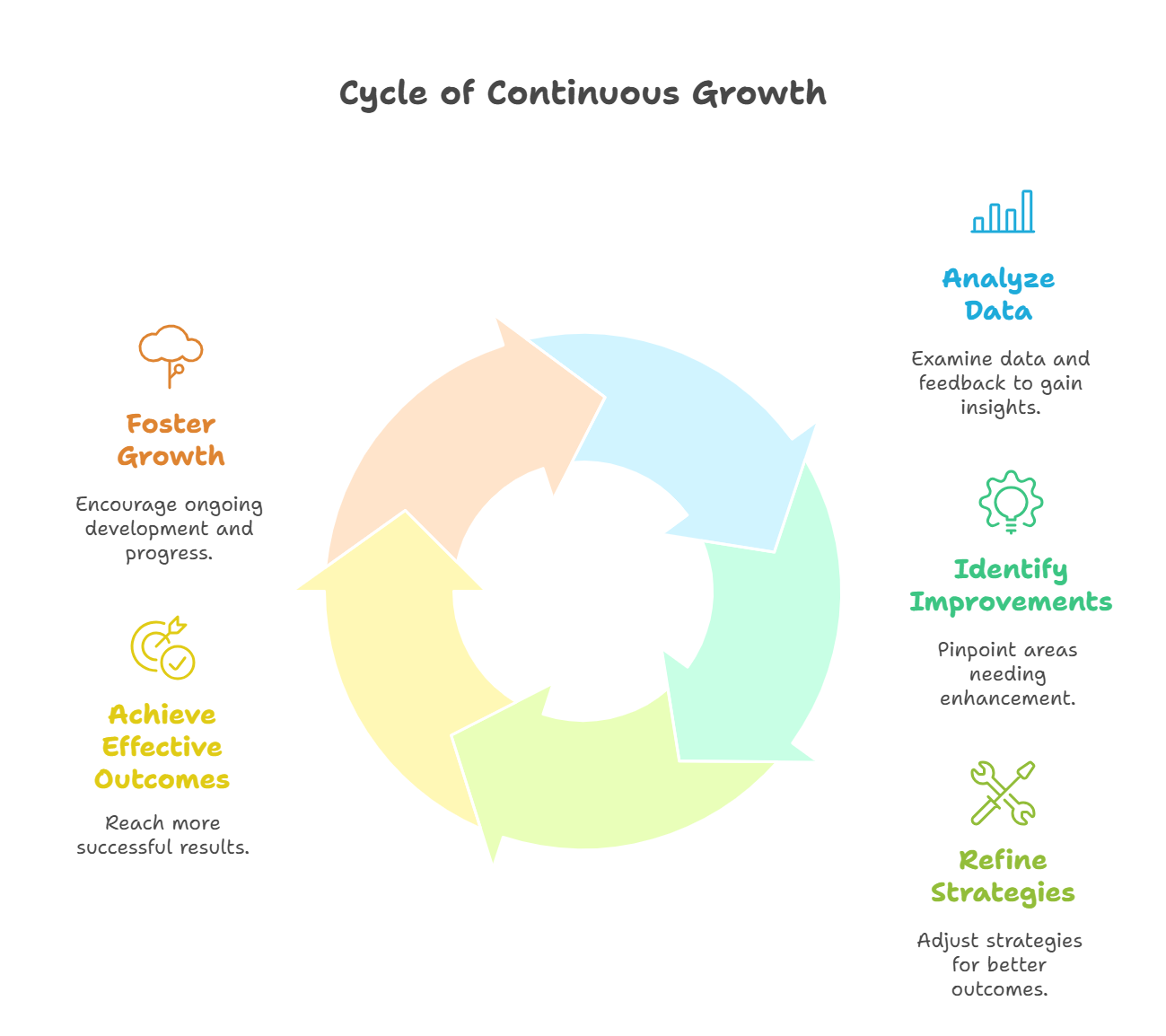
The product launch is not the end but the beginning of a new phase. A post-launch analysis of key metrics like sales figures, website traffic, customer feedback, and social media engagement is crucial for long-term business growth. It helps you evaluate the launch's performance and identify areas for improvement. To keep building momentum, you can also apply insights from profitable growth hacks to maximize your business revenue and turn early wins into sustainable success.
Use surveys, reviews, and social media monitoring to collect customer feedback. With valuable insights into customer perceptions, you can identify areas for product or service enhancement.
Based on the analysis of launch metrics and customer feedback, iterate and optimize your product, marketing, and customer service strategies. Continuous improvement is essential for long-term success.
Get Expert Guidance for a Profitable Product Launch
While planning ensures a successful product launch, it further demands the right strategy tailored to your specific goals. Whether you're launching a new business, rolling out a marketing campaign, or scaling your current operations, having expert guidance can make all the difference.
That’s why BoostMyProfit offers a Free Strategy Session, a no-obligation consultation designed to understand your needs and provide you with the best solutions. In just 45 minutes, we’ll help you identify the key steps to ensure a smooth and profitable launch.
Don’t navigate this journey alone. Book your Free Strategy Session today and set yourself up for success!
Frequently Asked question's
Start your product launch planning with research about your market and audience. Define your value proposition in the second step and create a product launch plan. Build marketing and sales strategies before preparing your team and resources, and execute a soft launch or beta test. After launching officially, aim to optimize based on feedback.
The four Ps of product launch include product, price, place, and promotion. Marketers who tick all these four boxes ensure fruitful results for their launch efforts.
If you want to launch a product, start with ideation and validation. Once that's done, follow it up with market research, product development, pre-launch marketing, and final launch. Don't forget to work on post-launch analysis to avoid any chances of loss.
Three most popular and effective product strategies include cost leadership, differentiation, and focus on niche strategy. Use one of these to reduce risks involved with a new product launch.
Positioning, prioritization, and performance combine to add efficiency to a product launch strategy. Many businesses fail to either position their product in the initial stage or lack prioritization or performance.
The four Ps of a product strategy start with the product itself. Elements like price, place, and promotion follow up to complete the strategy. It's the same as the traditional marketing mix.


good